Compost Science: Why Windrows are Better
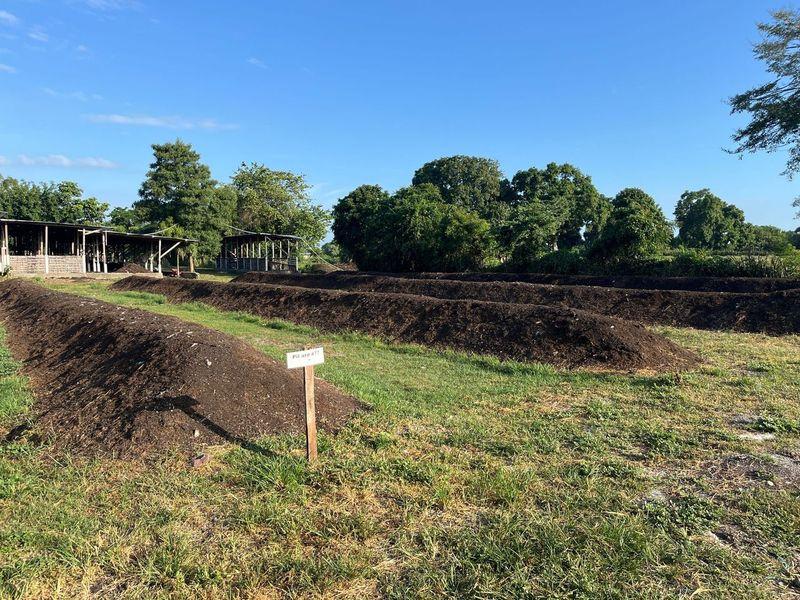
Mouchinette, Haiti
Providing safe sanitation doesn't end when a toilet container is collected from a household. What happens to the waste afterward matters just as much. For SOIL, the transformation of human waste into nutrient-rich compost is a core part of our model — one that turns a public health challenge into an environmental and agricultural asset. As EkoLakay has grown, so too has the need to make our waste treatment process faster and more efficient.
A recent peer-reviewed study published in the Journal of Water, Sanitation and Hygiene for Development takes a rigorous look at SOIL's composting operations at our Mouchinette treatment facility, comparing our traditional bin composting system with a newer windrow composting pilot. The research assessed whether both approaches safely meet international standards for pathogen elimination, and whether the windrow method offers meaningful efficiency gains for a growing service.
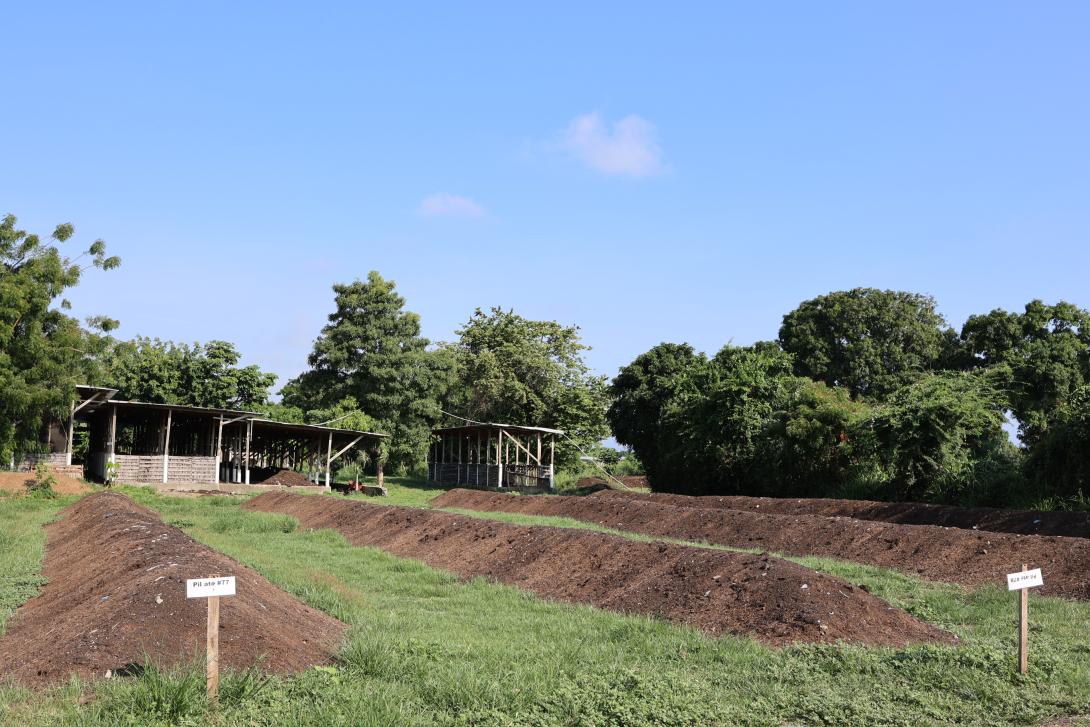
Windrow piles at SOIL's Waste Treatment site in Mouchinette
SOIL's waste treatment facility in Cap-Haïtien, where fecal material from EkoLakay households is composted with sugarcane bagasse to produce Konpòs Lakay, an agricultural-grade compost.
Key Research Findings
- Both systems met WHO safety standards for fecal sludge treatment. Whether using bins or windrows, SOIL's composting process consistently eliminated pathogens to safe levels, with temperatures sustained above 50°C and E. coli counts falling below 10 colony forming units per gram of finished compost. Safety is non-negotiable in our work, and both methods deliver it.
- Windrow composting is significantly faster. The windrow pilot reached maturity in roughly half the time of the bin system — approximately 3 months compared to 6.5 months or more with bins. This acceleration has major practical implications: faster throughput means the treatment site can handle more waste without requiring proportionally more land or infrastructure.
- The windrow method also increased compost yields. Greater aeration from regular turning of the windrow piles accelerated decomposition and produced more finished compost volume, supporting SOIL's ability to supply Konpòs Lakay to farmers across northern Haiti.
This research is a reminder that safe sanitation is a full-service commitment from the household toilet to the treatment site. The findings affirm that windrow composting is a viable, faster, and scalable pathway for SOIL's waste treatment operations, and help build the evidence base for container-based sanitation as a complete, circular solution in urban Haiti.
SOIL is committed to continuously improving every part of our service chain. By investing in research on our treatment processes, we can grow our capacity to serve more households while maintaining the safety and quality standards our customers and compost buyers depend on.
Read the full research paper in the Journal of Water, Sanitation and Hygiene for Development here.