RBF Baseline Survey: An Investigation of Sanitation Access and Coverage in Targeted High-Risk Zones
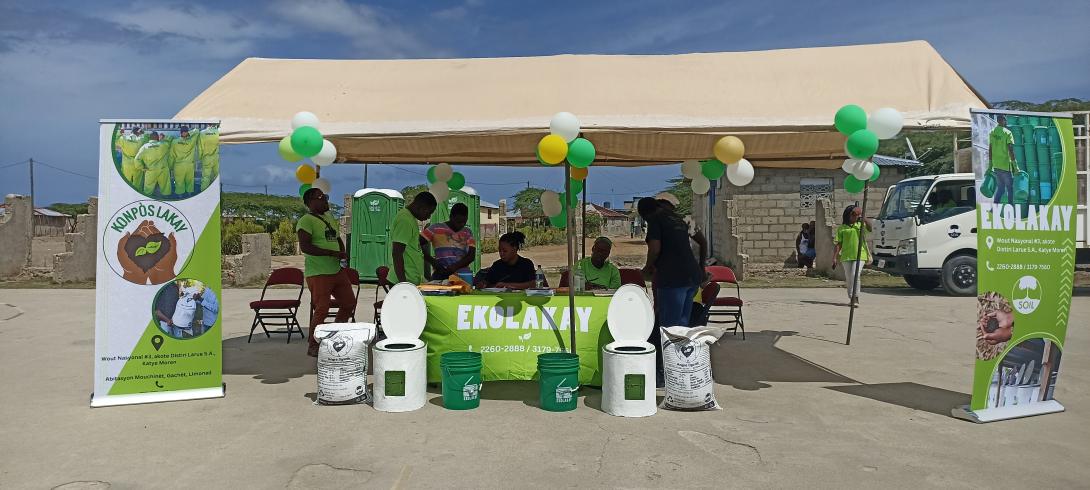
SOIL's sales team in Caracol
In the pursuit of advancing sanitation initiatives in Haiti, the SOIL research team recently completed a comprehensive population-level survey in Cap-Haitien as part of our Results-Based Financing (RBF) project. During SOIL’s initial conversations with IDB Lab regarding partnership around their Outcomes for Change Fund (OCF) pilot program in Haiti, it was determined that impact metrics would be necessary in order to track the results of our EkoLakay service as we worked to expand into three priority zones selected for the RBF project (Fort St-Michel, Limondade, and Caracol). It was decided that SOIL would launch an investigation of the sanitation situation in these areas by way of the EquityTool to establish clear metrics and measure our progress and impact over time.
For a survey of this scale, the SOIL research team partnered with Myriame Dorfeuille, a sanitation consultant with extensive experience conducting surveys in Haiti. We also contracted with a team of 20 local enumerators, in addition to SOIL’s research team members, to go door to door and compile data points that included household demographics, sanitation behaviors, toilet ownership, and satisfaction. Before heading out to the field, SOIL’s research team met with local community leaders (or CASECs - Conseil d’administration de la Section Communale) in the targeted zones to explain the purpose of the investigation and gather their feedback. The CASECs also accompanied the teams on the ground over the course of the survey and provided support by joining in on discussions with local residents. Their presence and participation helped considerably in gaining the trust and consent of the community as the team went door to door.
The survey was launched in October 2023 and our sizable team completed a total of 4,008 surveys in just 3 weeks! Completing the survey was a critical first step in SOIL’s groundbreaking participation in the OCF pilot. In addition to tracking our progress, understanding the baseline status of our targeted communities was imperative for highlighting the differing levels of financial risk within vulnerable communities as well as measuring accessibility to toilet options, and determining the primary means of sanitation use for families (before the installation of a SOIL toilet).
We launched our EkoLakay expansion efforts into the 3 targeted zones equipped with this important baseline data which the sales team used to determine the most effective and impactful marketing strategy that would bring as many families as possible onto the service, particularly the most vulnerable, who currently do not have access to improved sanitation. The results of our targeted marketing and sales push have been impressive–we installed a record number of toilets during the first quarter of the project and, despite the current political and security situation in Haiti, continue to grow the service at a steady pace.
We understand from SOIL’s Churn study and follow-up with customers who have left EkoLakay that while they highly valued our service, financial barriers were the consistent impediments to keeping it. (Good news: even with that reality, we still saw ~30% increase in improved sanitation access post-EkoLakay.) The OCF pilot and examination of the baseline data collected will support the SOIL team in directly addressing this most critical challenge within our high-risk zones and allow us to showcase what is actually working with respect to expanded improved sanitation coverage and hopefully help make the case for future financing. Our data analysis will also help our operations team better understand the degree of community level sanitation needs and overall demand. Leveraging this data with marketing efforts and strategies for special pricing plans could help defray the upfront costs and/or service fees, allowing more families to maintain the service, even in times of financial instability.
Future Actions
SOIL has begun a partnership with Aquaya, an established research consulting firm with significant expertise in launching targeted subsidy studies in several other countries, in order to further refine our data collection methodologies and help us design a follow-up exploratory study on targeted subsidies. The research team will use a follow-up study to identify vulnerability factors that we could potentially use to improve on the EquityTool formula which is important because we want to explore swapping out questions that might be too sensitive while still allowing for the ability to calculate a wealth score for each new client. The first phase of our partnership with Aquaya includes conducting a deeper analysis of our baseline survey data to better understand the implications of household relative wealth on toilet ownership and sanitation behavior. In the coming weeks, we look forward to sharing the details of our results in greater depth.
The RBF Baseline Survey marks a pivotal milestone in SOIL's involvement with the OCF pilot, providing invaluable insights into the sanitation landscape of the Cap Haitian region. Equipped with this comprehensive dataset, SOIL is prepared to navigate the complexities of community-level sanitation needs and spearhead tailored interventions when necessary. With strategic partnerships and a steadfast dedication to improving equity and access, SOIL will continue to drive meaningful change and pave the way for sustainable sanitation solutions in Haiti.