Capturing the Conditions of a Microbial Revolution
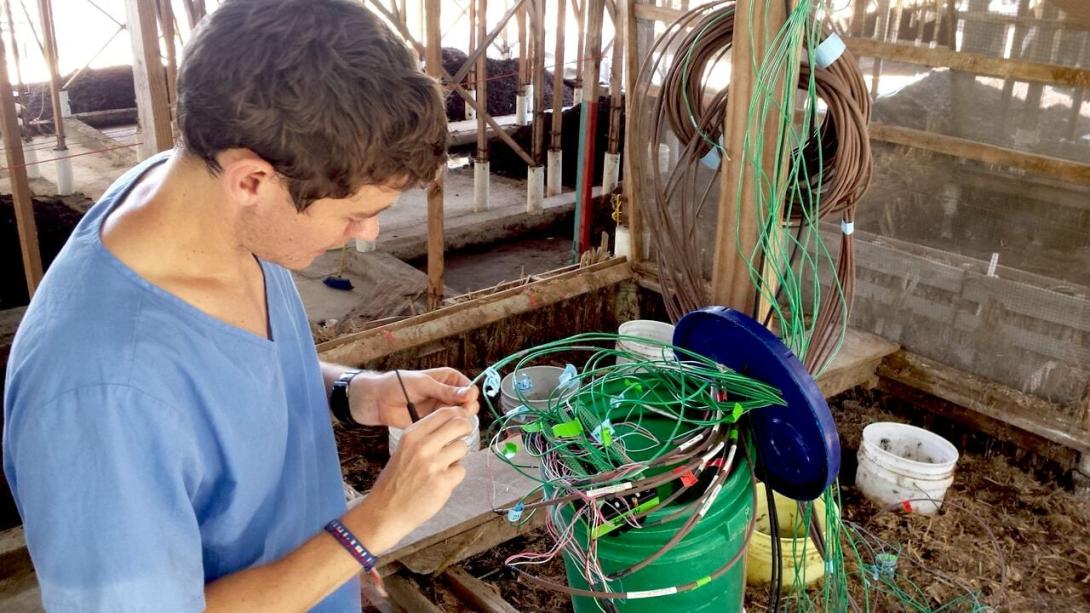
The latest research SOIL is conducting, in continued collaboration with the University of Hawai’i, is assessing how the thermophilic phase of the composting process facilitates the transformation of dangerous waste into safe and nutrient-rich compost.
After months of careful preparation, UH Mãnoa ecologists Gavin McNicol and Dr. Rebecca Ryals visited SOIL’s composting site in Cap Haïtien to install sensors that will monitor key variables that affect the microbial life of a compost pile: temperature, oxygen availability, and moisture. The microbial transformation that occurs during the thermophilic composting phase is often delicate and sensitive to change, which is why we are bringing scientists and composting technicians together at SOIL to better understand it.
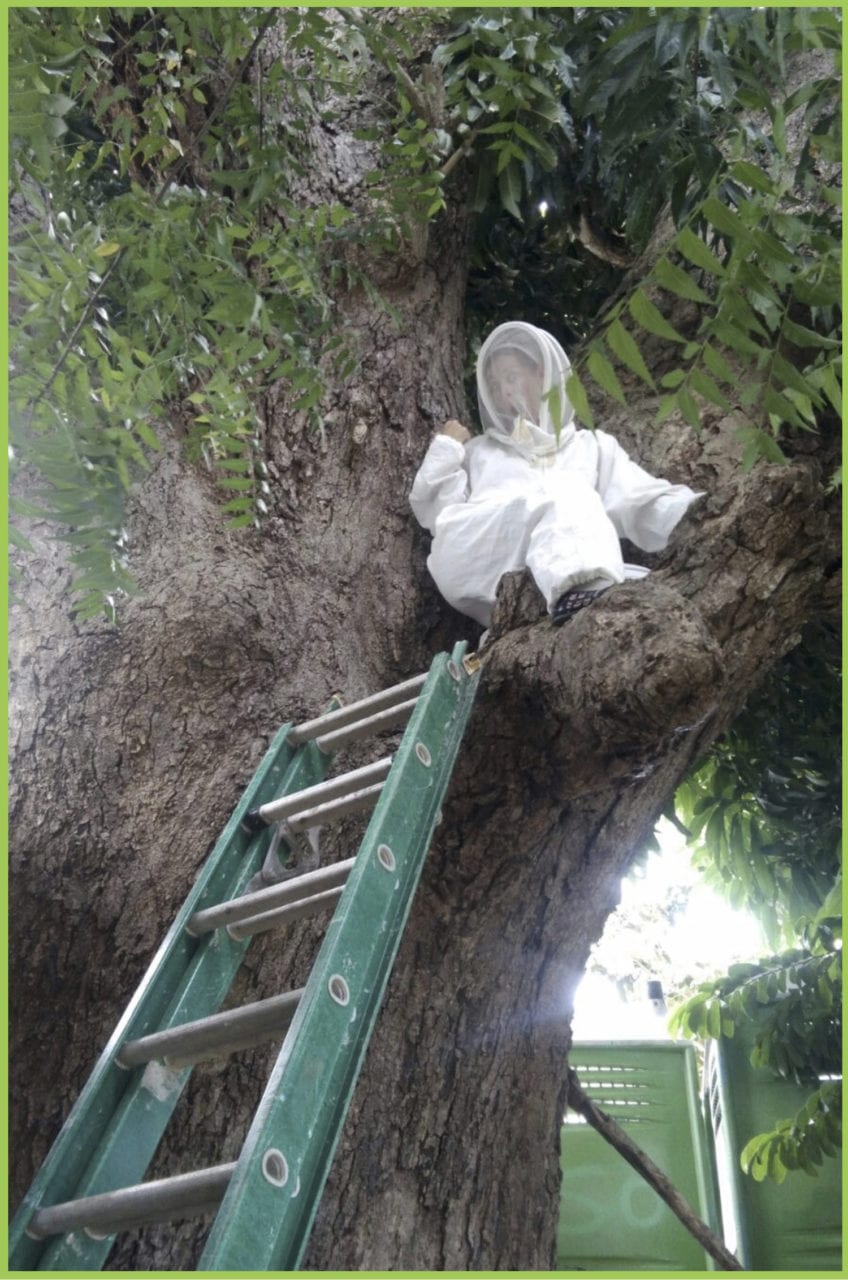
Over the course of four busy days, Gavin and Becca worked alongside SOIL staff and Climate and Compost Fellows to install 36 sensors across SOIL’s fresh compost piles. The installation of over a half a kilometer of cables, which connect the sensors to a solar powered data logging station, was a challenging mix of both expected and unexpected hurdles for the research team. While stringing cables through the canopies of two giant trees, Rebecca even had to don a bee-keeping suit to safely dodge swarming wasps!
Throughout the 90-day study, the new sensors will provide a rich set of data every 10 minutes to help us discover and document what conditions foster the best microbial and waste transformation.
What exactly is the thermophilic stage of the composting process?

Every time a microbe breaks apart the chemical bonds of an organic compound, such as those found in poop, a tiny amount of energy is lost as heat. When you build up a pile of organic material, like the waste inside SOIL’s compost bins, heat accumulates, getting trapped in the pile and causing the temperature to rise. Because microbes work faster at higher temperatures, there’s a positive feedback loop between the rate of decomposition and the production of heat - which ultimately creates the high temperatures necessary for thermophilic composting.
These high temperatures produced during the thermophilic phase of the composting process facilitate super-charged decomposition where dangerous pathogens are overwhelmed by exploding populations of non-pathogenic “decomposer” microbes. It’s a microbial revolution! This is the same basic decomposition process that happens in our stomachs when our bodies break down our food, or in the soil as it breaks down leaves, twigs, and other organic matter.
Microbial Revolution for Ecological Restoration
Every time SOIL fills up a compost bin with waste from EkoLakay household toilets, we are creating an environment that becomes a complex ecosystem which supports trillions of microorganisms. It is these microbes that do the dirty work of transforming human waste into stable and safe compost – Konpòs Lakay – that goes on to restore and replenish the earth. Check back to see what we’ve learned once the research team has collected and analyzed the data!
Support SOIL
SOIL depends on individual donations from people like you to fund our work in Haiti. Please consider supporting SOIL today.

Want to keep reading? Check out these other recent posts on the SOIL blog
[display-posts category="Latest Updates" include_date="true" date_format="M j, Y" not_in="6929" limit=3]